Tim Hortons is a Canadian coffee and quick-service restaurant chain that grew from a single doughnut shop in Hamilton, Ontario, into one of North America’s largest fast-food brands. If you have driven through Canada, you have almost certainly passed one, often two. This guide explains what Tim Hortons actually is, what people order there, how its loyalty program works, and where it differs from the competitors you probably already know.
Quick Answer: Tim Hortons is a Canadian coffee-and-food chain founded in 1964 by hockey player Tim Horton. It is best known for inexpensive coffee, doughnuts, Timbits, and breakfast sandwiches, and it operates thousands of locations across Canada, the United States, and a growing number of international markets.
Table of Contents
The Short History That Explains the Brand
Tim Horton opened his first shop in Hamilton, Ontario, in 1964. He was a professional hockey player, and the chain’s early identity was built around that association: coffee, doughnuts, and community hockey rinks. The company merged with Wendy’s in 1995 and later became part of Restaurant Brands International, the parent company that also owns Burger King and Popeyes.
That corporate history matters for one practical reason. Tim Hortons is not an independent mom-and-pop operation, even though its marketing leans heavily on small-town Canadian warmth. It is a large multinational brand with standardized operations and a menu designed to compete on speed and price. Knowing that helps set expectations: you are getting consistent, affordable fast food, not artisanal coffee.
The chain’s Canadian identity is genuine, though. It is routinely cited as one of the country’s most recognized brands, and its “Roll Up the Rim” promotion, a seasonal contest printed on coffee cups, has become a cultural ritual. The brand’s cultural weight in Canada is arguably stronger than its food is distinctive.
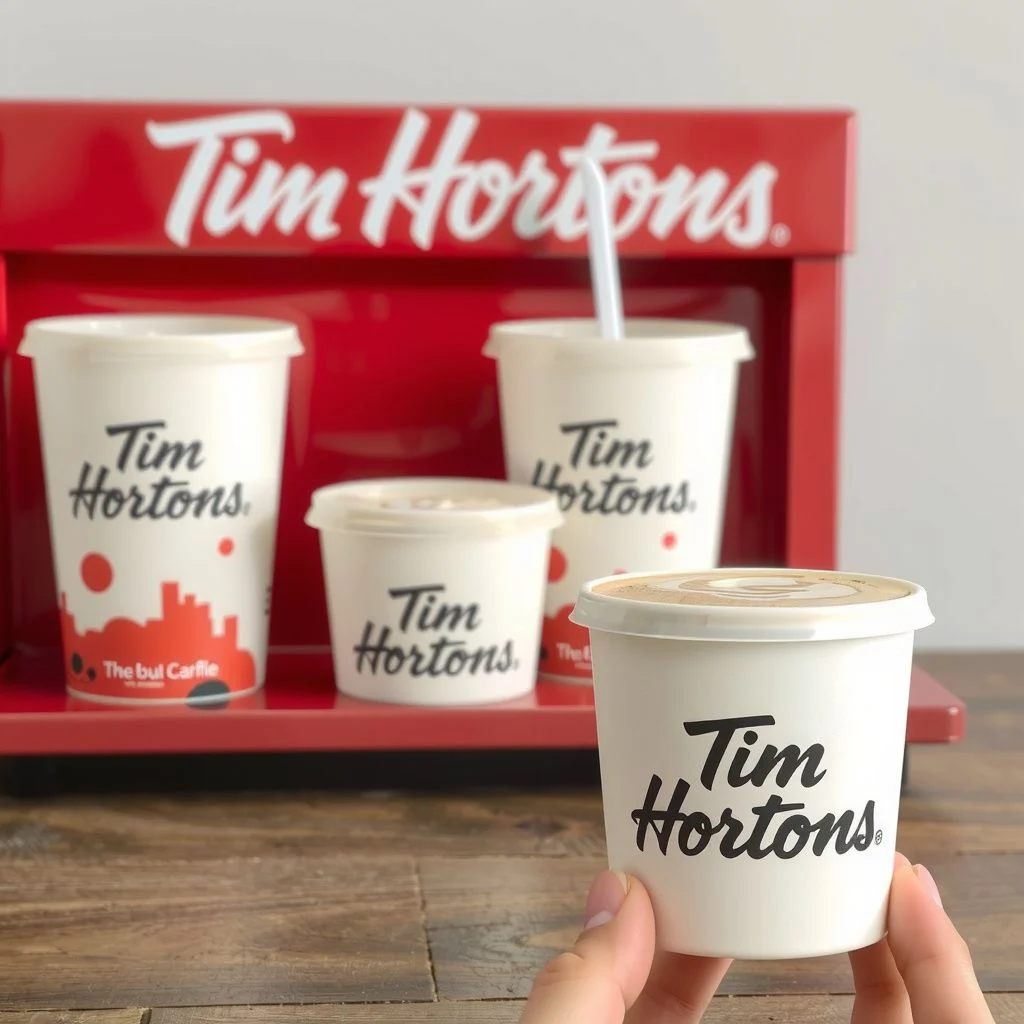
What the Menu Actually Looks Like
The core of the menu has barely changed in decades: coffee, doughnuts, and small baked goods. Around that core, Tim Hortons has expanded into breakfast sandwiches, wraps, soups, chili, and lunch items.
Coffee and hot drinks
The flagship product is a medium-roast drip coffee sold in small, medium, and large sizes. It is deliberately priced below specialty coffee chains. Espresso-based drinks, lattes, cappuccinos, and French vanilla are also standard. The coffee is generally described as smooth and mild rather than bold or acidic, which is part of its broad appeal.
Doughnuts, Timbits, and baked goods
Timbits are the chain’s signature product: small, round doughnut holes sold individually or by the box in assorted flavors. Standard doughnuts, muffins, cookies, and bagels round out the bakery case. These are the items most associated with the brand and the ones most worth trying on a first visit.
Breakfast and lunch
Breakfast sandwiches (egg, cheese, and a choice of bacon, sausage, or ham on an English muffin, bagel, or biscuit) are a major seller. Lunch options include wraps, grilled sandwiches, soups, and chili. Quality is consistent with fast-food expectations: convenient and inexpensive rather than remarkable.
| Category | Signature items | Best for |
|---|---|---|
| Coffee | Drip coffee, French vanilla, lattes | Budget-friendly daily coffee |
| Bakery | Timbits, doughnuts, muffins, bagels | Sharing, quick snacks |
| Breakfast | Egg and cheese sandwiches, hash browns | Fast morning meal |
| Lunch | Wraps, chili, soups, grilled sandwiches | Quick, cheap lunch |
The menu varies by country, so a location in the United States or the Middle East will not carry everything a Canadian store does. If you are traveling, check the local menu rather than assuming.
How the Rewards Program Works
Tims Rewards is the chain’s loyalty program, run through a mobile app. The general structure is points-based: you earn points on qualifying purchases and redeem them for food and drinks. The program has been revised more than once, and the exact point values and redemption tiers change by region and over time.
That is the honest answer: the mechanics shift, so the specific numbers you read in an old blog post may already be wrong. The reliable move is to check the official rewards page in the app or on the Tim Hortons website for your country before you plan around a redemption. What stays consistent is the model: scan or order through the app, accumulate points, redeem for menu items.
Pro Tip: Mobile order ahead is the single biggest time-saver at a busy location. Drive-thru lines at peak morning hours can be long, and placing the order in the app lets you skip the ordering step entirely.
Tim Hortons vs. Dunkin vs. Starbucks
The most useful comparison is positional. Each chain occupies a different spot on the price-and-speed spectrum.
- Tim Hortons competes on value and speed, with a mild coffee profile and a bakery-forward menu. It is strongest in Canada.
- Dunkin occupies a similar value-and-speed niche in the United States, with a comparable focus on coffee and doughnuts.
- Starbucks sits at a higher price point with a darker roast profile, more customization, and a cafe-style experience.
If your priority is the cheapest decent cup of coffee and a fast stop, Tim Hortons and Dunkin are the direct comparison. If you want espresso drinks, customization, and a place to sit, Starbucks is the different category. None of these is objectively better; they solve different problems.
One practical note for US readers: Tim Hortons has a smaller footprint south of the border than in Canada, concentrated in the Northeast and Midwest. Availability, not preference, often decides the comparison.
When Tim Hortons Is the Wrong Choice
It is worth being clear about the limits. Tim Hortons is not the place to go for specialty single-origin coffee, dietary-specific menus, or a quiet sit-down meal. The coffee is designed for broad, mild appeal, not for people who seek out bright, acidic, third-wave roasts. Locations are often busy and built for throughput rather than lingering.
If you have strict dietary needs, the menu does offer some lighter options, but cross-contact in a high-volume kitchen is a real consideration, and you should ask staff directly rather than rely on a menu description. For a fast, inexpensive coffee and a box of Timbits to share, it is hard to beat on value.
Key Takeaways
- Tim Hortons is a Canadian chain founded in 1964, now owned by Restaurant Brands International.
- Its identity is built on inexpensive coffee, doughnuts, and Timbits, with breakfast and lunch added over time.
- Tims Rewards is app-based and points-driven, but the exact terms change, so verify current details in the app.
- It competes on value and speed against Dunkin, and occupies a lower price tier than Starbucks.
- The US footprint is smaller than Canada’s, concentrated in the Northeast and Midwest.
Frequently Asked Questions
Q: What is Tim Hortons known for?
A: It is best known for inexpensive drip coffee, doughnuts, and Timbits, the small doughnut holes sold by the box. Breakfast sandwiches are also a major seller.
Q: Is Tim Hortons Canadian or American?
A: It was founded in Canada in 1964 and remains closely tied to Canadian identity, though its parent company, Restaurant Brands International, is a multinational corporation.
Q: Does Tim Hortons have a rewards program?
A: Yes. Tims Rewards is a points-based loyalty program run through the mobile app. Point values and redemption tiers change over time, so check the current terms in the app.
Q: What are Timbits?
A: Timbits are small, round doughnut holes sold individually or in boxes of assorted flavors. They are one of the chain’s signature products.
Q: Is Tim Hortons coffee strong?
A: No. It is generally a mild, smooth medium roast, which is part of its broad appeal. People who prefer bold or acidic specialty coffee often find it too mild.
Q: Where can I find Tim Hortons locations?
A: Use the store locator on the official Tim Hortons website. In the United States, locations are concentrated in the Northeast and Midwest.
References & Further Reading
- Tim Hortons official website
- Restaurant Brands International investor relations
- Tim Hortons on Wikipedia
- Dunkin’ official website
- Starbucks official website
How this article was created: Drafted with the help of AI, then fact-checked and edited by Muhammad Zeeshan Malik before publication.